
What, Why, and How of Dry-Dropper Fishing Montana’s Missouri River
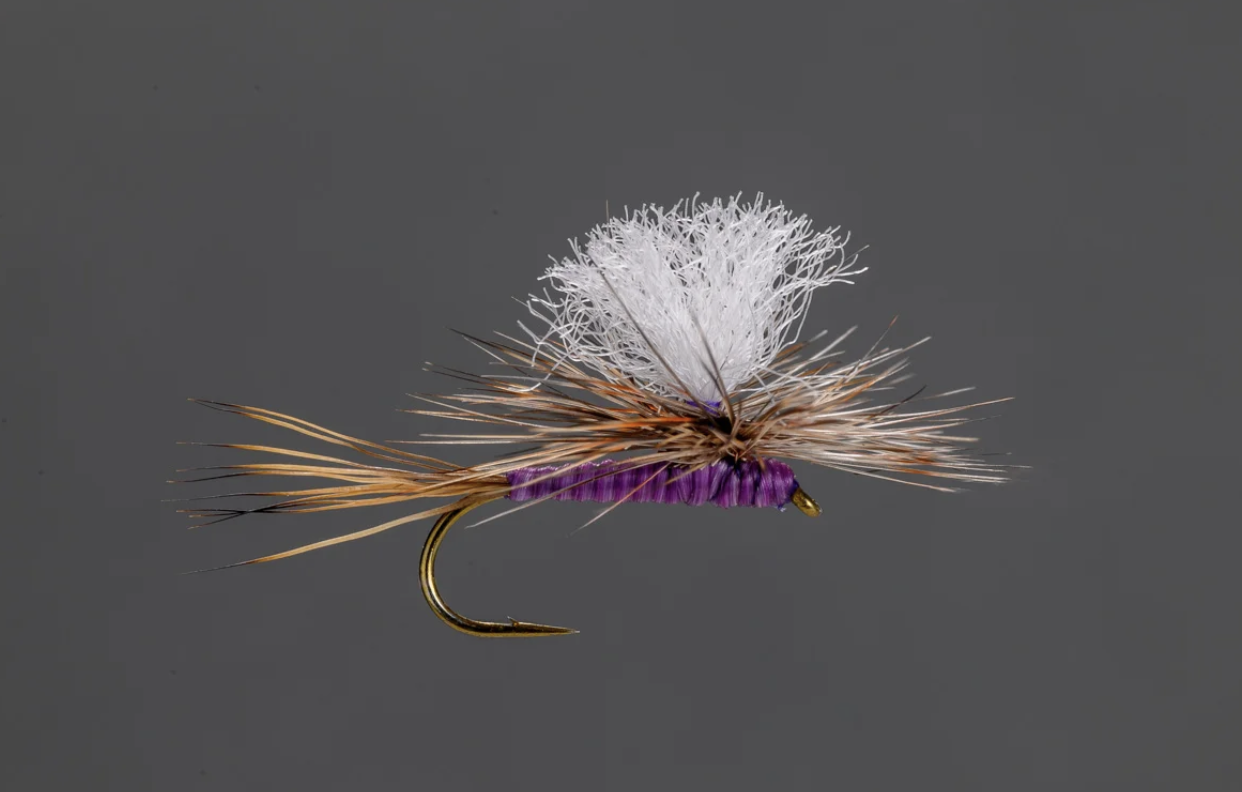
Purple Haze. Purple Craze. Parachute Adams. A size 16 film fly? You choose.
The Dry-Dropper game is strong. Many employ the Dry-Dropper technique here fishing Montana’s Missouri River. Why? Because it is fun, effective, and appropriate for many water types here locally.
It’s pretty simple. A two fly rig. Most all Missouri River anglers fish the double nymph rig. Why not fish a Dry-Dropper rig at some point in the day?
A common mistake is than many believe I am speaking about a Hopper-Dropper Rig. I am not. In my mind, and in the mind of many experienced anglers the Hopper-Dropper rig is a completely different rig. But, many call it a Dry-Dropper rig. Not to me, this author. They are two completely different rigs for a different skill sets.
A Hopper-Dropper is great for novices and those who like to switch from fishing a foam bobber to enjoying a foam hopper or Chubby Chernobyl in the water with a heavy, or not, ultra fast sinking fly. This style is heavily promoted and used. I understand. I like it. It is effective. But it is not the same.
You can throw the Hopper-Dropper combo as an expert too. It is not just for the anglers newer to the game. But, as I will say again, it is not the same deal.
A Hopper-Dropper rig is used as a learning device too. As mentioned above it can be deployed by those who are learning the non-bobber cast. A foam attractor fly does not have to land quietly or softly. It is made of FOAM. It will float most of the time. A Hopper or Foamie pattern does not have to be cast in a tight or specific location targeting a tiny current lane, or a feeding lie. It is a general technique that takes advantage of the highly floaty fly above the dropper fly pattern.
Many tie a Zirdle Bug from the shank of the foam fly. This is a highly effective technique locally. But, the specific location required for success is out of the boat. Where should I cast this? Out of the boat. Out there. As far as you can.
Much different than employing a Dry-Dropper rig at or near a rising trout, or a specific feeding lane with narrow parameters.
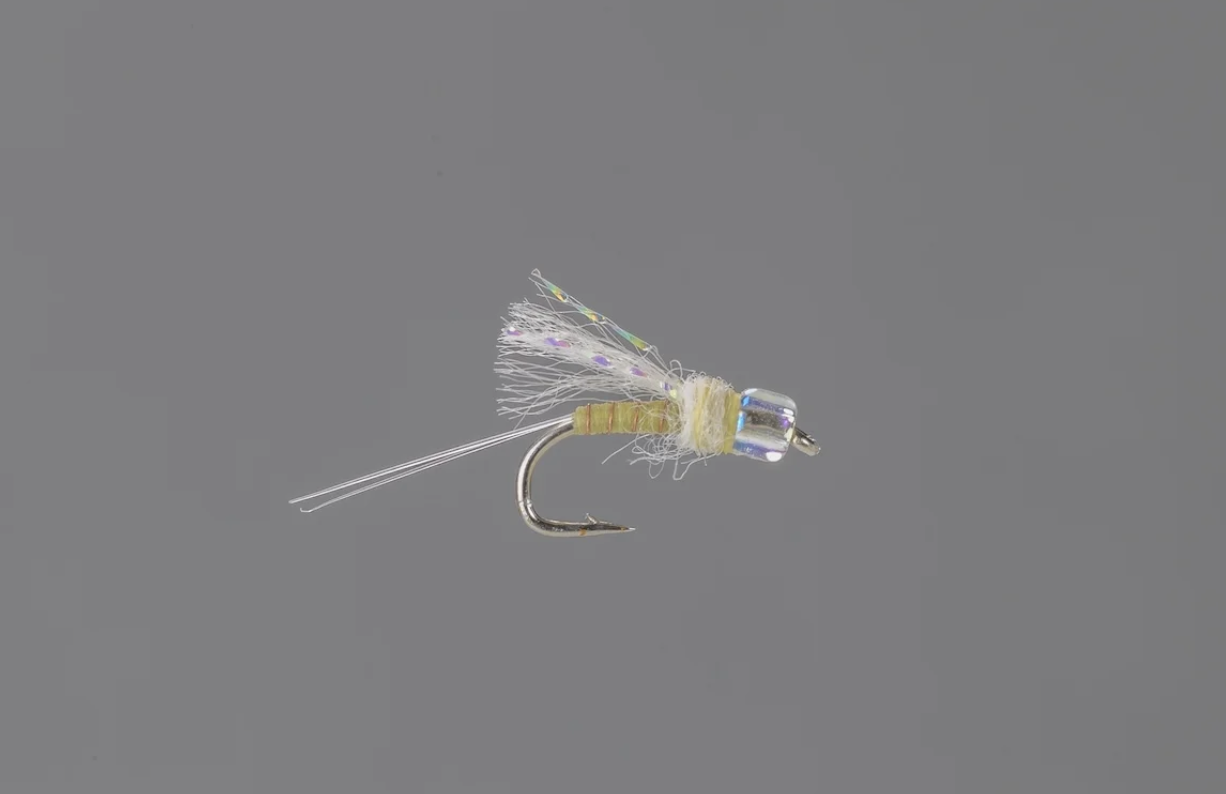
Tiny Pseudocloeon imager. Love the glass bead!
I see that Google has this all wrong too. It states, as it searches for info about this technique, that a Dry-Dropper Rig uses a big floaty foam fly. Maybe that is where we are as a fly fishing culture. Dumbing it all down to the lowest common denominator. Dude, you caught one on a dry fly. Or a heavily weighted dropper hung below a wing laden foam indicator.
The theory presented being you need a high floating foam fly to support your heavy rapidly sinking bottom fly. Again, this is a different technique.
What I am writing about is a completely different technique, objective, and outcome.
Dry-Dropper rigs do get the angler into two water zones. Most of the time I am fishing a light dropper fly. Putting the fly just below the surface. As above with the glass beaded pattern you can fish the film fly, or barely sub-surface pattern, in the correct zone. Eating emergers or sinking cripples, or flies stuck in the meniscus.
Some of the time an unweighted sow bug. Sometimes a lightly beaded mayfly or caddis patterns. I believe that the effectiveness relies on not trying to get the two flies in completely differing zones. Expecting to be effective with a long dropper tippet section of 30” with a heavily beaded tungsten fly or a size 12 T-Head Prince is not what we are after in this mode. The dry fly will not perform well on the surface and the dropper portion/zone will not operate correctly either. The water is slower the lower or deeper you sink in the water column. The surface speed is quicker. Two rates of speed in two differing water zones.
A dry-dropper rig that plays in similar water environs, where both flies are in the game, can be an effective method for those who like to increase the technical quotient while effectively covering two water zones.
How far between the flies Mark? I have been all over the board in the last 30+ years on this Q. I am currently fond of the 30” version. I commonly tie a Parachute Adams, size 12, with a size 18-20 black beaded or not soft hackle below. A pheasant tail beaded or not is my second choice. A soft hackle pheasant tail? Yes! I love it.
Many tie a Zebra midge from the shank. Other flies include a local favorite the Translucent Emerger. Sometimes an uncreased Griffith’s Gnat or LaFontaine Buzzball. Again, the unweighted sow is a fantastic producer.
Yes, light and technical Dry-Dropper fishing can be so fun and effective. You can truly dictate with modern fly patterns and rigging techniques where the flies are in the water column form the surface to the depths below.
But, again, this rig I am speaking about registers near the top of the fly fishing skill set.
Once again, I believe that if you try to achieve location of both flies too far apart, meaning trying to get the dropper fly quite deep, feet, this technique is not for you. If you want your nymph to live deeper…use a bobber for fishing success.
The intricacies of this technique are fascinating. The length of the tippet from the top fly shank is important. The length of the leader to the top fly is important. All can be changed. The diameter of your tippet to the top fly and bottom fly is important. All should be changed if your rig is not operating properly. And all of this is subjective. The size of the top fly, the bottom fly, the weight of the bead or not. Some may be variable. Change it if your rig is not casting well, or operating well.
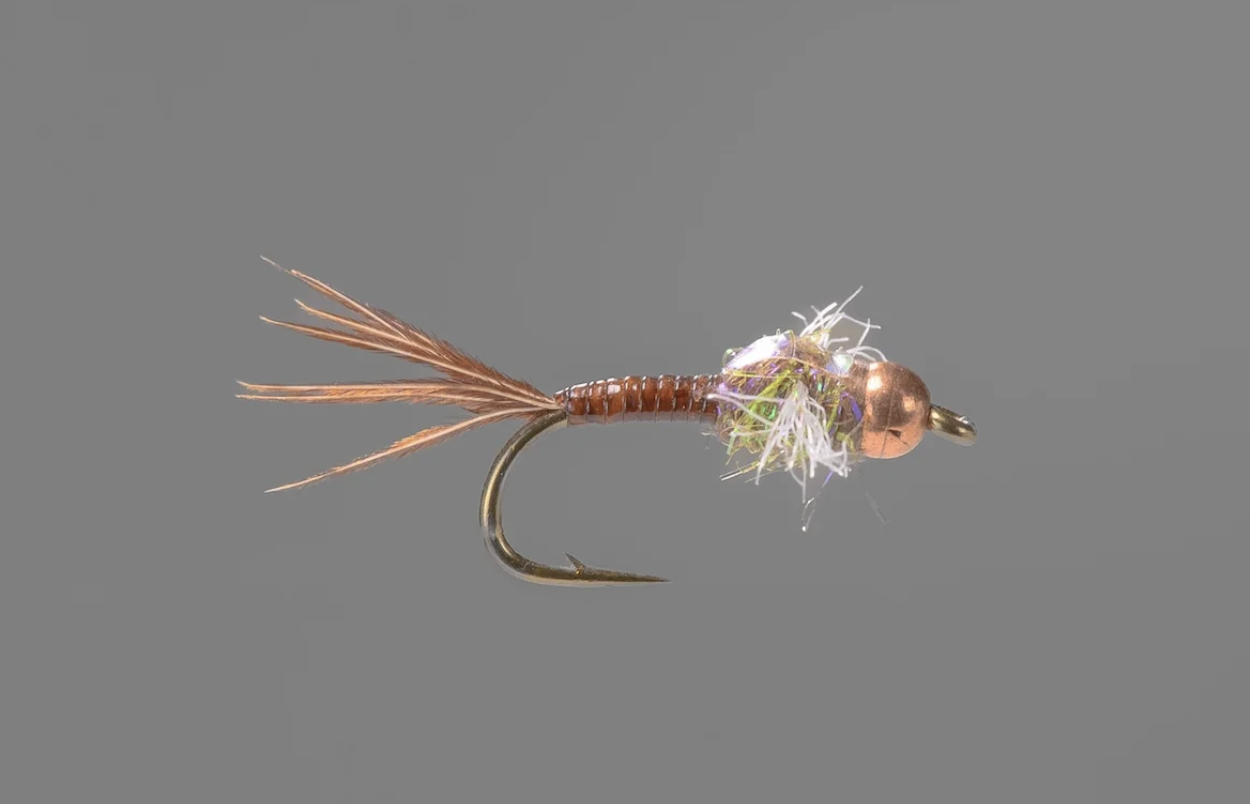
A Top 5 Dropper Fly!
Sometimes you may tie a short dropper rig. As short as 6” sometimes. A winter technique here for midge fishing is to tie a Cluster Midge of some sort up top. Tie on a short 6” or shorter a black softie or Zebra Midge. Toss it in those circling winter rainbows in tailouts and eddies and wait.
Again, you get to choose the location of the dropper fly. Be forward thinking and change if not producing or if you believe there can be improvement.
Use various types of tippet material. Nylon for the top fly. Fluorocarbon for the bottom fly. But you can certainly use the nylon for bottom fly. All about what you want to achieve and location of the the two flies.
Now what should I do? Go fish. As much of fly fishing learning revolves around trial and error…go fish. You will find what works for you the individual. What works of rme, your neighbor, and yourself can be three differing styles. And that is OK. Yep.
Dry-Dropper fishing here on Montana’s Missouri River can be very effective. If you are targeting surface, or near surface feeders you will certainly enjoy the Dry-Dropper style that we employ so very often.
Go out there and experiment!
See you on the water, We love the fall session. And it is on!